Dental Restorations in Arlington, VA
A dental restoration brings a damaged tooth back to full function, whether it's been cracked, worn down, or hollowed out by decay. At Mayer Smile Be Bright, Dr. Kelly Mayer handles everything from a simple tooth-colored filling to a crown that rebuilds a molar, all in one Arlington office.
If you've been chewing on one side, ignoring a lost filling, or putting off a tooth that's been bothering you, you're not alone. Most patients come in unsure of what they need. That's exactly what the first visit is for.
Call us at (571) 366-3992 or reach out through our contact page.
Start Here If You're Not Sure What You Need
- An exam and X-rays come first, and Dr. Mayer will walk you through what she finds before recommending anything.
- She will help you understand which option saves as much of your natural tooth as possible, since the right answer is not always a full crown.
- The number of visits and the cost both depend on the restoration type, the material, and whether any prep work is needed first.
From First Look to Final Fit

Here's what happens at each visit, so nothing catches you off guard.
- Exam and X-rays. Dr. Mayer examines the tooth, takes X-rays, and checks the gum tissue around it. She's looking at how much healthy structure remains, whether the nerve is involved, and whether your bite is putting unusual pressure on that tooth. Then she shows you the images and explains what they mean in plain language.
- Choosing your restoration. Options range from a filling, inlay, or onlay to a crown, bridge, or implant-supported restoration, depending on how much damage there is. We walk through what each one involves, what it costs, and how long it should last. If you'd like a night to think it over, that's a normal answer.
- Treatment day. We numb the area thoroughly before anything starts. Decay is removed, the tooth is shaped to fit the restoration, and if it's a filling, it's placed and hardened the same day. Crowns, bridges, inlays, and onlays are custom-made, so you'll wear a temporary while that's being done.
- Final placement and bite check. When the final piece arrives, we place it and check the fit carefully. Before you leave, you'll tap and grind gently so we can confirm the bite feels right. Small adjustments here are the difference between a restoration you forget is there and one that nags at you for weeks.
The Difference a Repaired Tooth Actually Makes
- Chewing on both sides again. Most people don't realize how much they've adapted around a sore tooth until it stops being sore.
- Protection for what's left. A crown or onlay reinforces a weakened tooth so a small crack doesn't become a split that can't be saved.
- Less sensitivity. Covering the sensitive inner layer of the tooth usually settles that sharp reaction to cold water or hot coffee.
- A stable bite. Restoring the tooth's shape keeps neighboring teeth from drifting or taking on extra wear.
Signs Your Tooth Needs More Than a Cleaning
- A tooth cracked, chipped, or broken from an injury or an unlucky bite on a popcorn kernel
- Decay that has moved past what a cleaning can address
- An old filling, crown, or bridge that is worn, leaking, or loose
- A missing tooth that is changing how you chew or how you feel about your smile
- Pain or sensitivity with heat, cold, or pressure
Some situations need a different first step. If decay has reached the nerve, the tooth usually needs root canal treatment before a crown can protect it. If gum disease is active, we treat the gums first because a crown placed on unhealthy tissue will not hold. If a tooth is too far gone to save, Dr. Mayer will be straight with you about whether an extraction, an implant, or a denture makes more sense.
How Many Appointments Will This Take?
Here is what to expect for the most common paths:
- Exam and plan: one appointment, usually under an hour, including X-rays and a conversation about your options.
- Filling: same day, often 30 to 60 minutes depending on size and number.
- Crown, bridge, inlay, or onlay: two visits. The first prepares the tooth and places a temporary. The second puts your permanent piece in place, typically a couple of weeks later.
- Work involving grafting or implants: longer, with healing time between steps. We'll map out every date before anything starts.
If something breaks, we fit urgent visits in as soon as we can.
What Happens Before and After the Chair
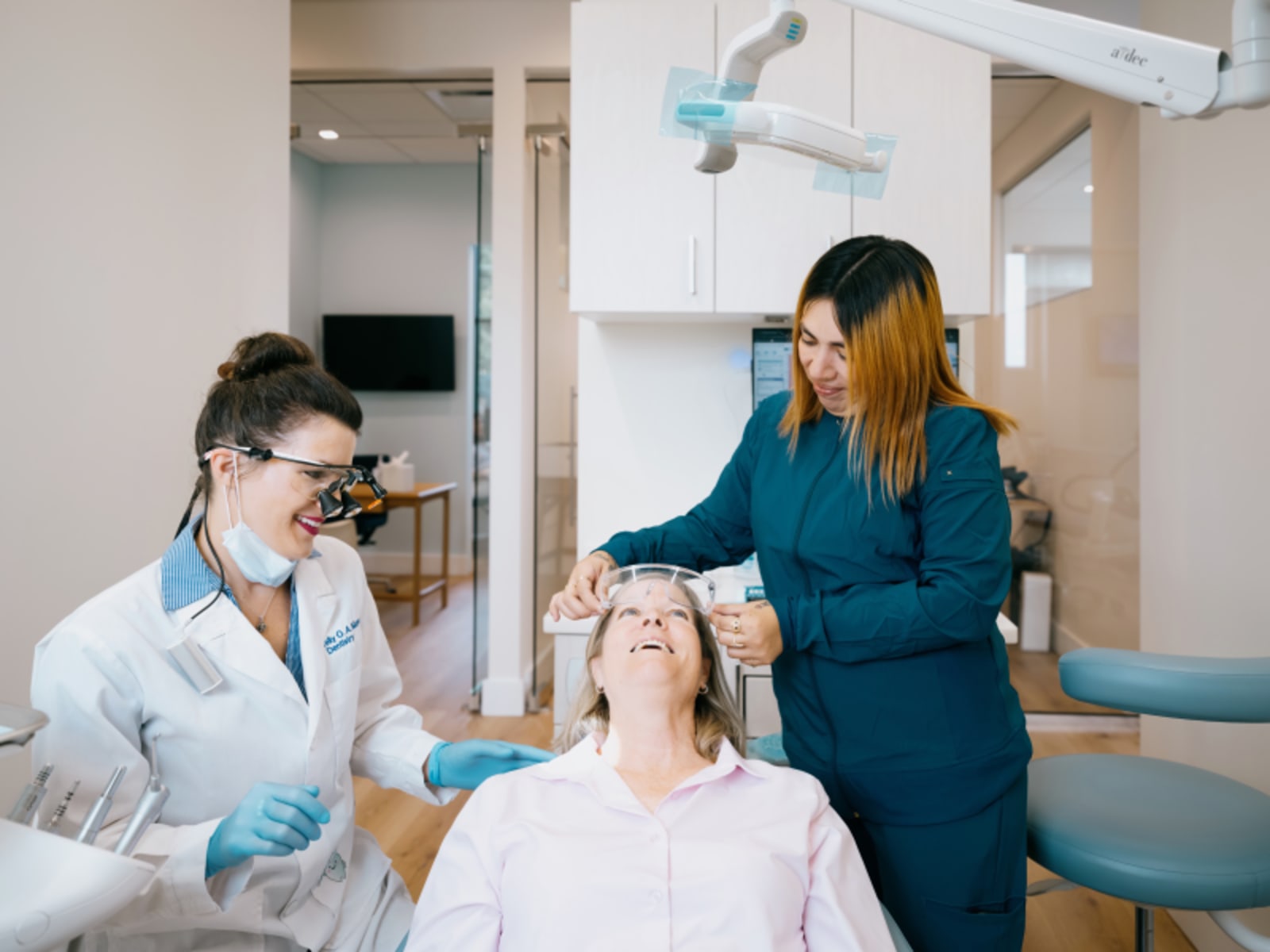
Getting Ready
Eat beforehand, bring your insurance card and a medication list, and if you're planning on sedation, we'll walk you through any additional prep and arranging a ride home.
The First Few Days
The numbness fades over a few hours. Wait until it's fully gone before chewing, so you don't accidentally bite your cheek. Some sensitivity to cold or pressure is completely normal and usually settles within a week or two. If you have a temporary crown, avoid sticky or very hard foods, and slide floss out sideways rather than snapping it upward.
Making It Last
Brush twice a day, floss around the restoration daily, and keep up with your regular cleanings. If your bite feels off after a few days, sensitivity gets worse instead of better, or anything feels loose, let us know and we'll get you in quickly.
The Difference You'll Notice at Our Arlington Office
Dr. Mayer has more than 13 years of clinical experience, a general practice residency at UNC, and a dental degree from MCV/VCU.
- Healthy tissue before finished teeth. We use a Biolase soft tissue laser and PRP/PRF biomaterials to care for your gums and support healing, so crowns and bridges sit at the gumline the way they should.
- Comfort options for every level of anxiety. Nitrous oxide, oral conscious sedation, and IV sedation are all available, so nerves don't have to stand between you and getting treated.
- Everything under one roof. Grafting, implants, and full-mouth reconstruction are all part of the services we offer, so complex cases don't get split across offices.
- Your own X-rays on the screen. Dr. Mayer points to the crack or the dark spot under the old filling and walks you through what each option would mean for that specific tooth.
- Bilingual care. Dr. Mayer is fluent in French and welcomes Francophones and Francophiles from across Northern Virginia.
Be heard, smile bright, dentistry done right. Contact our Arlington office at (571) 366-3992 to get started.
What Patients Usually Ask Before They Come In
How Do I Know Whether I Need a Filling or a Crown?
It comes down to how much healthy tooth is left. A filling works when the damage is contained and the tooth around it is still solid. A crown makes more sense when a tooth is cracked, heavily worn, or so hollowed out that a filling would have nothing to hold onto. We'll show you the X-ray and explain which option fits your tooth.
Will My Restoration Look Natural?
That's the standard we work to. Composite and porcelain are shaded to match your neighboring teeth, and the shaping matters as much as the color, especially on front teeth where light passes through the edge. The result should blend in, not stand out.
How Long Do Dental Restorations Last?
Many years, with good home care and regular checkups. The material used, which tooth it's on, and whether you grind at night all play a role. We'll give you a realistic range for your specific restoration rather than a marketing number.
Does Getting a Restoration Hurt?
The tooth is fully numb before we start, so most people feel pressure and vibration rather than pain. Some mild soreness or cold sensitivity for a few days is normal and fades on its own. If dental work makes you anxious, sedation is available.
Can I Eat Normally Right Afterward?
Wait until the numbness wears off, then a permanent filling or cemented crown handles ordinary chewing just fine. A temporary crown needs more care: stick to soft foods, avoid anything sticky, and floss gently until the final restoration is placed.
What Happens If I Put It Off?
Decay keeps spreading and cracks keep growing. A tooth that needs a filling today can need a crown in six months, root canal treatment, or eventually an extraction. The longer it waits, the more involved the fix tends to be.
Start With a Look, Leave With a Plan

You don't need to arrive knowing which restoration you need. Come in, let Dr. Mayer take a look, and walk away knowing exactly what's going on and what your options are.
We're at 6500 Williamsburg Blvd in Arlington, open weekdays 8:30 to 5, with emergencies by appointment. Call (571) 366-3992 or reach out through our contact page.