Dental Veneers in Arlington, VA
If you have a chipped tooth, stains that whitening never quite reached, or a smile that feels off every time you see a photo, porcelain veneers are worth a real conversation. They are thin custom shells bonded to the front of your teeth to adjust color, shape, length, or spacing, and they tend to solve problems that other treatments can only partially address.
At Mayer Smile Be Bright, Dr. Kelly Mayer plans each case around your face, your bite, and what you actually want to look like. There is no stock result here. Every detail, from shade to proportion, is chosen with you before anything is touched.
Call our Arlington office at (571) 366-3992 or reach out here to get on the schedule.
What to Know Before You Commit
- Ask to see the plan before anything is touched. You should know how many teeth are involved, what shade and shape we're aiming for, and why, before preparation starts.
- If you grind or clench your teeth, or have bite issues, that doesn't rule you out. It does change the plan and can affect how long your veneers last, so bring it up early.
- Veneers are an out-of-pocket cosmetic procedure, and dental insurance generally doesn't cover them.
- Getting veneers means removing a thin layer of enamel from each tooth. That's a permanent change, so it's worth being confident in the decision before you start.
Each Appointment, Explained
1. Consultation and Smile Assessment
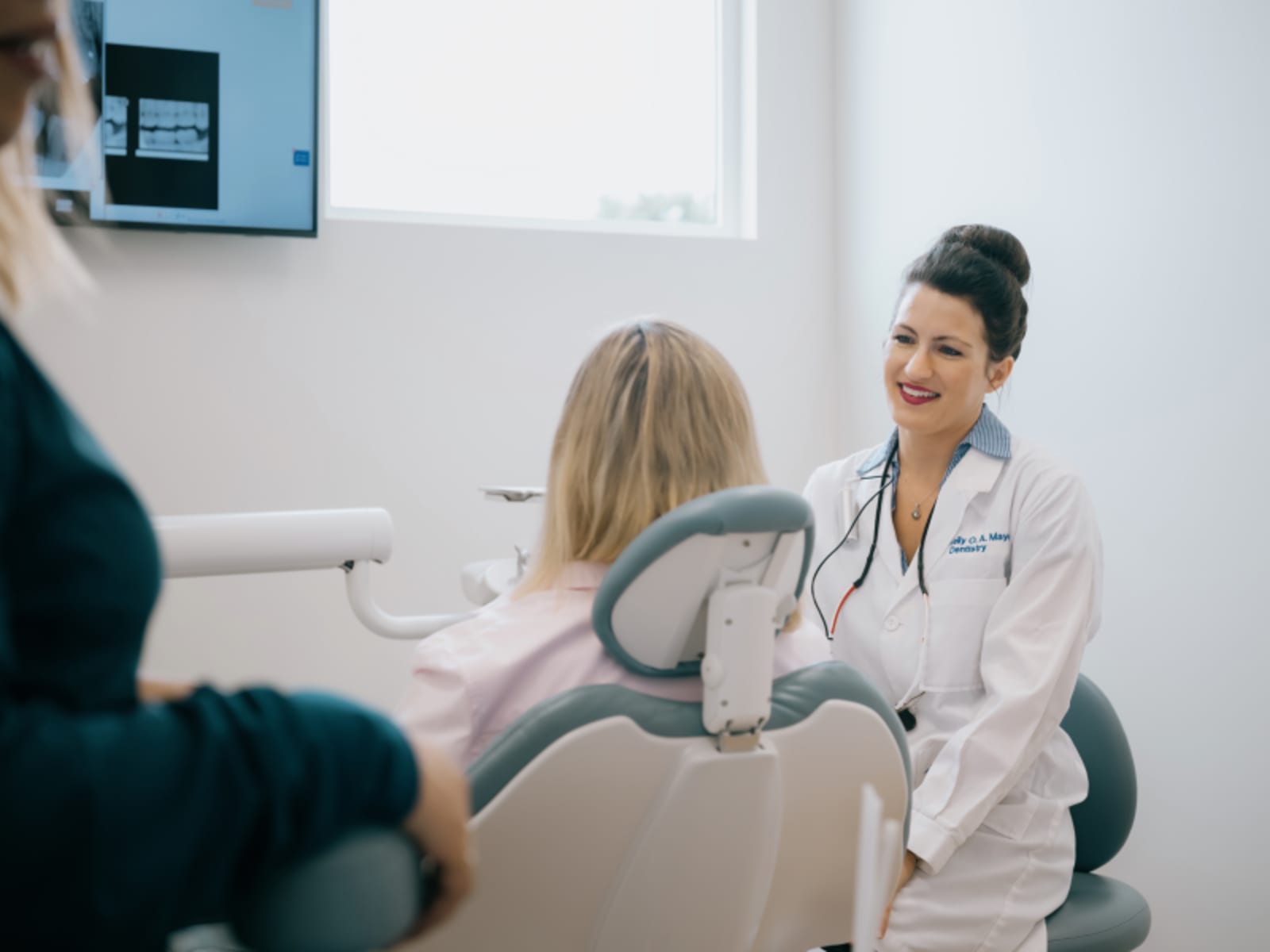
Your first visit is mostly conversation and a checkup. We look at your teeth, gums, and bite, take photos and records, and talk through what specifically bothers you, like the length of a front tooth, a gap, or a shade that never brightens. Dr. Mayer is straightforward about what veneers can and can't solve for your particular teeth.
2. Design and Shade Selection
Before any preparation, we choose the shape, length, surface texture, and shade together. Your input matters here, and so does how your teeth relate to your lips and face. Getting this right is what separates a natural result from one that looks like veneers.
3. Tooth Preparation and Impressions
A thin layer of enamel is removed from the front of each tooth so the veneer sits flush rather than bulky. You're numb for this step. We then take impressions or a digital scan so your veneers fit precisely against your gumline and neighboring teeth.
4. Temporaries While Your Veneers Are Made
Temporary veneers protect the prepared teeth and give you a preview of the new shape for a week or two. If something feels too long, too short, or awkward when you talk, let us know and we can adjust the final design.
5. Bonding and Final Adjustments
We place the finished veneers first, check them against your face in natural light, and only then bond them permanently. Your bite gets checked and refined, edges get polished, and you leave with care instructions.
What Veneers Can Fix That Other Treatments Often Can't
- Stains whitening can't reach. Deep internal discoloration, old restorations, and antibiotic-related staining don't respond to bleaching. Porcelain covers the tooth surface entirely, so you choose the shade rather than hoping bleach gets you there, and glazed porcelain won't absorb coffee, tea, or red wine the way natural enamel does.
- Shape and proportion, adjusted. Short teeth, worn edges, a slightly rotated tooth, and a narrow smile are all things veneers can reshape without moving the tooth itself.
- Small gaps, closed. For minor spacing, veneers can close things up in a couple of visits rather than months of aligner wear.
- A chipped front tooth gets covered. The veneer takes over the visible surface, giving the tooth a clean, whole appearance again.
- And they last. With good hygiene, regular cleanings, and protection from grinding, porcelain veneers commonly go a decade or more before needing replacement.
If you're weighing veneers against another approach, Dr. Mayer will walk you through what each option can and can't do.
Are You a Good Candidate for Veneers?
One thing needs to be in good shape before we start: you need enough natural enamel left. Porcelain bonds to enamel, not to the softer layer beneath it, so if too much has worn away, a veneer may not be the right fit.
A few situations call for a different plan:
- Heavy grinding or clenching. Porcelain chips under that kind of force. We may address it first and include a night guard as part of your plan, not as an afterthought.
- Significant crowding or bite misalignment. When teeth are substantially out of position, orthodontics like Invisalign often gives a better and more conservative result than covering over the problem with veneers.
- Structurally damaged or heavily filled teeth. A tooth that has lost a lot of structure usually needs a crown, which wraps the whole tooth, rather than a veneer on the front.
- Stains that are surface-level only. If professional whitening can get you there, that is a simpler and less permanent option, and we will tell you so.
An exam with Dr. Mayer is all it takes to find out which applies to you, and she will give you a straight answer about which path makes the most sense.
What Happens at Each Appointment

Most cases wrap up in two to four weeks. Your first visit is a conversation: we look at your teeth, take photos and records, and talk through your goals so you know exactly what the plan involves before anything starts. Once the design is confirmed, Dr. Mayer prepares the enamel, takes a scan or impressions, and places your temporaries. That appointment runs longer, so plan accordingly.
Your veneers are made over one to two weeks while you wear the temporaries and give us feedback on how they feel. At the bonding visit, you approve the final look before anything is permanently set, and we check and polish your bite before you leave. A short follow-up a week or two later confirms everything is settling well.
Prepping for Your Visit and Protecting Your Results
Before your prep visit, make sure your cleanings are current and any cavities or gum issues are taken care of. Bring photos of smiles you like and ones you don't. That tells us more about your taste than any description would.
After your veneers are placed, caring for them is straightforward. They need the same attention as natural teeth, with a few things to avoid:
- Brush twice daily and floss carefully around each veneer, where buildup tends to cause the most trouble.
- Keep up with regular cleanings so we can check in on your gum health over time.
- Wear a night guard if you grind your teeth.
- Avoid biting nails, pens, and ice, and do not use your front teeth to open things.
Some temperature sensitivity in the first few days after bonding is normal. Call us if it has not settled within two weeks.
How Dr. Mayer's Background Shapes Your Veneers

Dr. Mayer brings more than 13 years of clinical experience to every case, with training at the Medical College of Virginia, a general practice residency at UNC, and a background in biochemistry and studio art at UVA. That combination matters for veneers: it means the porcelain bonds correctly and the proportions actually look like you.
- Gum Health Handled In-House. Veneers only look right when the gumline frames them well. We handle gum contouring and crown lengthening directly, using a soft tissue laser and platelet-rich materials that support faster healing. See the full range of services we offer.
- Explanation Before Treatment. You will see your own photos and records and understand why each recommendation is being made before anything starts. Here's what to expect at your first visit.
- Comfort Options if You Need Them. Nitrous oxide and sedation are available for patients who find dental work stressful.
- A Personal, Local Practice. Our office on Williamsburg Blvd serves Arlington, and Dr. Mayer is fluent in French.
Every part of your care, from gum prep to final bonding, happens under one roof with the same doctor guiding the plan from start to finish.
Questions Patients Ask Before Saying Yes
Do Veneers Hurt?
We numb the area before any preparation, so you won't feel the enamel being shaped. Some sensitivity to hot and cold in the days after is normal and usually settles within a week or two.
Will They Look Fake?
They shouldn't. Overly bright, perfectly uniform veneers are a design choice, not a given. Shade, translucency, length, and surface texture are all chosen deliberately, and you see and approve the look before anything is bonded.
Can Veneers Be Reversed?
No. Because a thin layer of enamel is removed to make room for the porcelain, those teeth will always need a veneer or crown covering them. It's a permanent change, which is why the design stage matters so much.
How Long Do Porcelain Veneers Last?
Many last a decade or more. It depends on grinding habits, hygiene, gum health, and whether you use your front teeth as tools. They can be replaced when they eventually wear or chip.
Should I Whiten First, or Get Veneers?
If your teeth are the right shape and just too dark, whitening is the simpler, less permanent option. If shape, chips, or spacing are part of the problem, whitening won't solve it. Both options are covered under our cosmetic and restorative services.
How Many Teeth Need Veneers?
It depends on how much of your smile shows when you laugh and talk. Some cases involve a single tooth matched to its neighbors. Others cover the six to ten teeth visible in a full smile. We figure that out together at your consultation with Dr. Mayer.
Start With a Conversation, Not a Commitment
You don't need to have your mind made up before you come in. Let Dr. Mayer take a look at your teeth and gums, and you'll leave with an honest sense of what veneers would and wouldn't do for you. If a different path is the better fit, she'll tell you.
Our Arlington office is at 6500 Williamsburg Blvd, open weekdays 8:30 am to 5 pm, and new patients are welcome. Call (571) 366-3992 and we'll find a time that works.